
WE SHIP WORLDWIDE
Best RFID Blocking Wallet for Travel
I used to roll my eyes at the phrase "digital pickpocketing" until it happened to me in a way that felt way too real. On a busy trip (crowded trains, tourist spots, constant tapping to pay), I started seeing charges I did not recognize. My bank handled it, but the stress was the part that stuck with me: freezing cards while abroad, updating payment details, and wondering how it happened in the first place.
I cannot prove the exact method, but the timing and pattern pushed me to tighten up my travel wallet setup. That is when I started paying attention to RFID blocking wallets, slimmer carry habits, and the small details that stop mistakes when you are tired, distracted, or rushing through an airport.
This guide is everything I wish I had before that trip: what RFID blocking actually does, how to choose the best RFID blocking wallet for travel, and how to pick between a full RFID wallet, a slim card holder, or a premium luxury wallet that still works on the road.
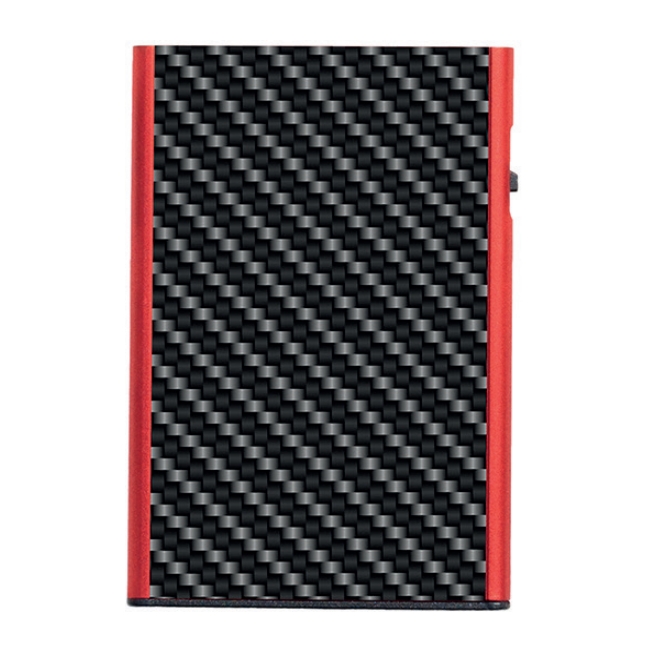
RFID wallet by Tru Virtu
What RFID Is (and what it is not)
RFID stands for Radio Frequency Identification. In wallet talk, people usually mean contactless cards or IDs that can be read at a short distance by a reader. If you tap a card to pay, you are using a contactless system that can be scanned at close range.
An RFID blocking wallet adds a shielding layer that helps reduce the chance of a nearby reader picking up the signal from the cards inside. Think of it as a privacy layer. It is not a magic forcefield, and it does not protect you from every kind of fraud. But it can reduce one very specific risk when you are in crowded places.
The travel features that matter more than the RFID label
Here is the honest truth I learned after my own scare: the best RFID blocking wallet for travel is the one that makes it easier to stay organized and harder to make mistakes. Travel puts you into "fast mode" and that is when things slip.
1) Fast access without flashing your entire wallet
Airports, transit gates, taxis, hotel check-ins - these are all moments where you open your wallet quickly and close it quickly. A good travel wallet lets you pull one card without exposing everything else. Look for smart slot placement and a layout that feels natural, not fiddly.
2) Secure closure for movement days
If you do a lot of walking, trains, scooters, or long sightseeing days, a zipper or snap can prevent accidental drops. If you prefer ultra-slim carry, go with a card holder that grips cards tightly and does not loosen after a few uses.
3) Comfort in the pocket you actually use
The safest place for your wallet is often your front pocket or an inner pocket of a jacket or crossbody. If the wallet is bulky or uncomfortable, you will move it around more - and that is how people lose things. Comfort is a security feature.
4) A realistic cash plan
Even in card-friendly cities, cash still pops up: tips, small shops, markets, public bathrooms, and emergencies. A travel wallet should hold a few bills neatly without turning into a thick brick.
Choose your type: RFID travel wallet vs card holder vs luxury wallet
Option A: RFID travel wallet (best for organization)
Choose an RFID travel wallet if you carry multiple cards, cash, and want everything to have a place. It is also great when you are traveling with family and end up holding extra items like tickets, receipts, or spare keys.
Browse options here: RFID wallets
Option B: RFID card holder (best for minimal travel)
A slim RFID card holder is my favorite option for city trips. It is easier to control in crowds, it is comfortable for all-day walking, and it naturally encourages you to carry less. After my fraud scare, I became a big fan of "carry what you need today, not what you might need someday."
Browse options here: Card holders
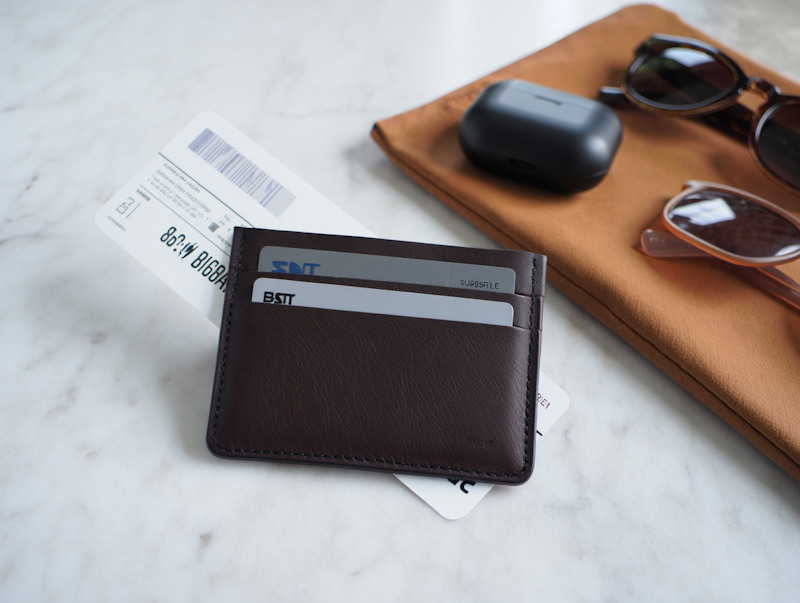
Leather RFID wallet
Option C: Luxury wallet with travel-friendly features (best for mixed trips)
Some trips are not just beaches and sneakers. If your travel includes dinners, meetings, or events, a luxury wallet can be a practical choice as long as it still works like a travel wallet: strong card retention, a clean layout, and comfortable carry. The goal is to avoid a wallet that looks great but becomes annoying the moment you are rushing through a station.
Browse options here: Luxury wallets
Materials and build quality checklist (so your wallet survives the trip)
Travel is rough on everyday carry. Your wallet gets squeezed into pockets, rubbed against zippers, dropped on café tables, and handled with sunscreen or sanitizer on your hands. If you want it to hold up, build quality matters.
- Leather: Great for long-term durability and a classic look. Full-grain leather tends to age best.
- Fabric (nylon, canvas): Lightweight and practical for humid climates or outdoor-heavy travel.
- Vegan leather: Can look sharp, but quality varies. Look for reinforced edges and solid stitching.
- Metal cases: Often slim and protective, but can feel rigid in pockets and may not suit everyone.
Pay attention to corners and folds. Those are the failure points. Stitching should look consistent and tight, edges should feel sealed (not raw), and if there is a zipper, it should glide smoothly without snagging.
RFID blocking layer: what to look for (without getting lost in marketing)
Most RFID blocking wallets use a shielded lining or integrated layer around the card area. The best real-world results usually come from designs where the shield covers the full card compartment, not just a small patch.
One practical tip: RFID blocking can also make it harder to tap and pay without taking the card out. That is not a flaw - it is the point. If you tap constantly, consider a wallet setup where your main stack is protected, while one quick-access card sits in an easy-to-reach slot. Some travelers even keep a transit card separate for speed.
My simple travel wallet system (the part that actually changed everything)
After dealing with stolen card details, I stopped carrying my "entire life" in one wallet. The best security upgrade was not a fancy gadget - it was a simple system.
Step 1: Build your daily carry
- 1 primary payment card
- 1 backup payment card (optional, but helpful)
- 1 ID you actually need day to day
- A small amount of cash in mixed bills
- A transit card if your destination uses one
Step 2: Store backups separately
Keep your second backup card and extra cash in a different place than your wallet. A hidden pocket in your bag, a money belt, or a hotel safe (if available) works. The goal is simple: avoid a single point of failure.
Step 3: Reduce wallet exposure moments
Many travel mishaps happen when you open your wallet in a crowd, get distracted, and walk away missing something. My rule now is boring but effective: wallet stays in hand until it is fully closed, then it goes back to the same pocket every time. Consistency beats complicated hacks.
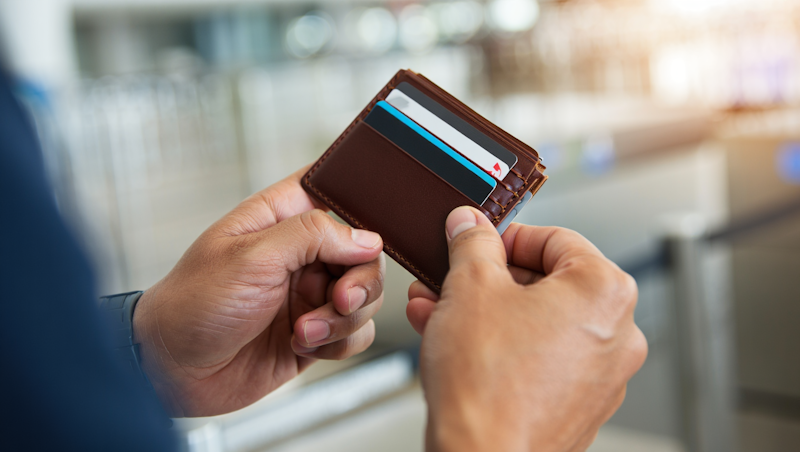
Minimalist slim RFID wallet
Which RFID wallet style is best for your trip?
Instead of naming one single wallet as "the best" for everyone, match your wallet to how you travel. This is the fastest way to end up with a wallet you actually like using.
If you are doing city hopping and public transit
- Best style: Slim RFID card holder or compact bifold
- Why: Fast access, comfortable front-pocket carry, less bulk in crowds
- Shop: Card holders
If you are traveling with family and carrying more items
- Best style: RFID travel wallet with structured compartments
- Why: Keeps cards and cash organized so you do not fumble in busy moments
- Shop: RFID wallets
If you want one wallet for travel and nicer occasions
- Best style: Premium wallet with a practical layout and strong build
- Why: Looks sharp, lasts longer, still comfortable on the road
- Shop: Luxury wallets
Buyer checklist (copy this before you shop)
- Where will I carry it most days - front pocket, jacket, crossbody, backpack?
- How many cards do I truly need daily?
- Do I want a closure (zipper or snap) for movement days?
- Do I need cash storage, or am I mostly card-based?
- Is it comfortable when I sit, walk, and commute?
- Does it feel strong at corners, folds, and seams?
FAQ: Best RFID Blocking Wallet for Travel
Do I really need an RFID blocking wallet for travel?
If you carry contactless cards and spend time in crowded transit areas, RFID blocking can be a simple extra layer. If your cards are not contactless, it matters less. Either way, organization and safe carry usually make the biggest difference.
Will an RFID wallet stop fraud completely?
No. It targets one specific risk. Physical theft and scams are still common travel problems, so keep your wallet secure, limit what you carry daily, and store backups separately.
Is a slim RFID card holder enough for travel?
For many travelers, yes. It is discreet, comfortable, and encourages minimal carry. If you need more cash, receipts, or multiple documents, choose a larger RFID wallet instead.
How can I tell if a wallet actually blocks RFID?
Look for a wallet designed with a dedicated shielding layer. A simple test is trying to tap a contactless card while it is fully inside the wallet. Results vary by reader strength and wallet design, but it can give you a quick real-world signal.
Final thought
I wish I could say my card issue was a one-time annoyance and nothing more, but it changed how I travel. The good news is that a better wallet setup is easy: carry less, keep backups separate, and pick a wallet that is comfortable and secure enough that you do not constantly handle it in public.