
WE SHIP WORLDWIDE
What are the advantages of a carbon wallet?
I have a confession: I do not fall for wallet hype easily. I am the kind of person who reads about fiber layups, resin systems, edge finishing, and wear patterns the way other people read reviews about "softness" or "premium feel." I like materials that have a reason to exist. I like objects that earn their place in my pocket by being lighter, stronger, more stable, and more durable than the alternatives.
That is exactly why carbon wallets are interesting. Not because carbon looks cool (it does). Not because it sounds expensive (it can be). But because carbon fiber is a serious engineering material that behaves differently than leather, aluminum, or plastic. When it is used correctly, it can create a wallet that is thin without feeling fragile, stiff without feeling bulky, and modern without feeling like a gimmick.
In the wallet world, you will see carbon used in minimalist card holders, hybrid wallets with levers or ejectors, and premium travel-focused designs. Brands like OGON, Tru-Virtu, and Solo wallets have carbon models that aim to combine strength and sleek daily carry. If you are a materials fan like me, carbon is not "just a finish" - it is a functional choice with real advantages.
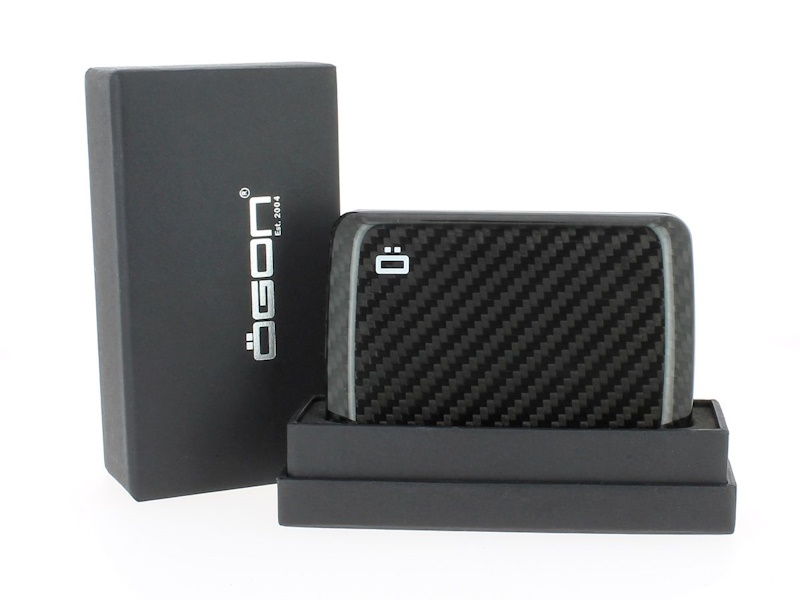
Sleek minimalist wallet inspiration (carbon-style carry)
First, what "carbon wallet" usually means
Not every product marketed as "carbon" is truly carbon fiber. In many accessories, carbon can mean one of three things:
- Real carbon fiber composite: Carbon fibers embedded in resin, formed into panels or shells.
- Carbon fiber laminate layer: A thin carbon layer over another structure, used for stiffness or style.
- Carbon-look pattern: A printed or embossed pattern that looks like weave but is not carbon.
The advantages in this article come from real carbon fiber composite behavior - the stiffness-to-weight ratio, dimensional stability, and how the structure resists bending and deformation. If you are shopping, the easiest clue is how the wallet feels: real carbon composite tends to feel rigid and light at the same time, with a crisp "tap" sound and a surface that looks deep rather than flat.
Advantage 1: Stiffness without bulk (the pocket feel is different)
Leather wallets get their structure from thickness. Folded leather needs enough material to keep shape, and that material stacks up fast once you add multiple card slots, a cash pocket, and stitching.
Carbon composite gets structure from stiffness, not thickness. Carbon fibers carry load extremely well in tension, and in a composite panel the fibers and resin work together to resist bending. In practical terms, this means a carbon wallet can stay flat and stable even when it is thin. It does not "puff up" over time the way soft materials can. If you love a front-pocket carry, this is a real comfort upgrade.
Advantage 2: High strength-to-weight ratio (light, but not flimsy)
A good carbon wallet feels almost unfair: you pick it up and your brain expects weight, but it is surprisingly light. That is the strength-to-weight advantage that makes carbon popular in high-performance applications.
For daily carry, weight matters more than people admit. A heavy wallet pulls on pockets, shifts around when you sit, and becomes annoying on travel days when you are walking all day. Carbon is one of the few materials that can deliver a rigid, protective structure without making you feel like you are carrying hardware.
Advantage 3: Dimensional stability (it keeps its shape in real life)
Materials change shape for boring reasons: heat, moisture, repeated flexing, compression, and time. Leather stretches. Fabric frays. Softer plastics creep. Even metal can dent or deform in the wrong situation.
A well-made carbon composite shell is impressively stable. It does not stretch. It does not soak up moisture. It does not develop that slow "wallet slump" where everything starts to look rounded and tired. If you like gear that stays crisp and engineered, carbon is satisfying.
Advantage 4: Scratch and wear behavior that hides age better
Carbon finishes vary, but many carbon wallets use a resin top layer that resists everyday abrasion well. You can still scratch it (anything can scratch), but the wear often looks like a gentle patina rather than a damaged surface. On some weave patterns, small marks disappear visually because the texture breaks up the reflection.
Compare that to painted edges on low-quality leather, which can crack, or shiny plastics that show every scuff. Carbon tends to age in a way that feels "technical" rather than messy.
Advantage 5: Water and sweat friendliness (underrated for travel)
If you travel, you already know how often your wallet meets humidity, rain, sunscreen hands, or a cold drink that sweats onto your pocket. Leather can absorb moisture and oils. Fabric can hold smells. Some metals can show corrosion at edges or hardware.
Carbon composite itself does not absorb water. The resin surface is generally easy to wipe clean. This makes carbon wallets especially appealing for hot climates and heavy-walking trips, where your pocket gear needs to behave, not complain.
Advantage 6: It pairs well with RFID blocking designs
RFID blocking is usually achieved with a dedicated shielding layer, not simply by choosing a "cool material." That said, carbon wallets are often built around structured shells or plates, and that construction style makes it easier for brands to integrate shielding layers cleanly and consistently.
If your goal is a travel-ready carry that is slim, rigid, and organized, carbon is a natural match for the same design thinking that goes into good RFID products: tight tolerances, predictable compartments, and a shape that does not deform as you use it.
Advantage 7: The "mechanical" feeling of access systems
Many modern wallets use mechanisms: ejectors, sliders, lever systems, or structured card stacks. Those mechanisms work best when the frame is rigid. Carbon is excellent here because it supports precise movement without flex.
This is one reason carbon shows up in premium minimalist wallets. Tru-Virtu, for example, is known for clever access systems and precise build feel. A rigid material helps that system stay smooth over time. OGON has also played with structured, modern wallet design language across materials, and carbon fits that direction. Solo wallets have carbon options as well, leaning into the sleek, durable, modern-carry category.
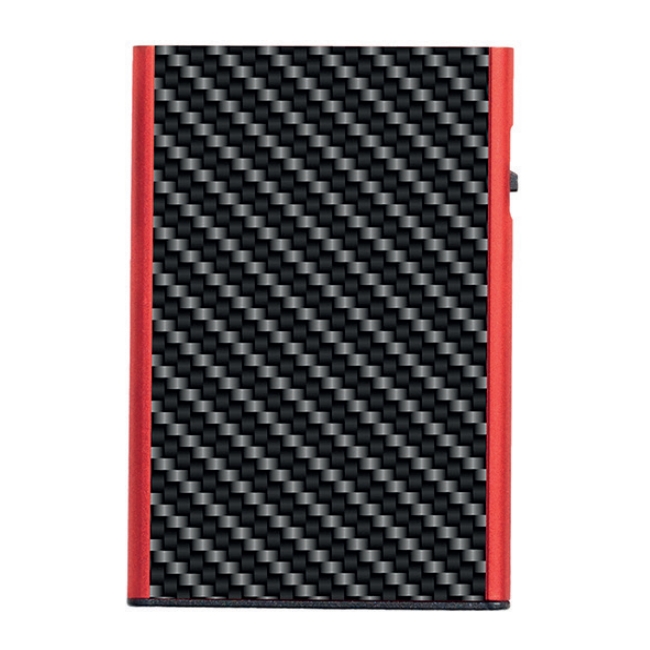
Traditional wallet materials still work - carbon is about engineered rigidity and slim carry
Carbon vs other popular wallet materials (from a materials fan perspective)
Carbon vs leather
Leather is warm, classic, and repairable. Carbon is crisp, rigid, and stable. If you love the idea of a wallet becoming softer and more personal over years, leather wins. If you want a wallet to stay slim, flat, and engineered, carbon wins.
Carbon vs aluminum
Aluminum cases protect cards well and can be very slim, but they can dent, and their edges can show wear quickly. Carbon can feel less "cold" in the hand and can be lighter in comparable rigid designs. Aluminum is still great, especially for hard-case style, but carbon often feels more refined in daily pocket comfort.
Carbon vs titanium
Titanium is tough, premium, and corrosion-resistant, but it is heavier than carbon and can be expensive. Titanium wallets feel like hardware (in a good way if you like that). Carbon feels like performance gear.
Carbon vs polymer/plastic
High-quality polymers can be excellent, but many cheap plastic wallets flex and fatigue over time. Carbon composite stays rigid and holds its shape, which is the whole point of choosing it.
What to look for when buying a carbon wallet
If you want the advantages of carbon, focus on the build details that show the material is being used correctly:
- Edge finishing: Clean edges with no rough fiber fray or sharp spots.
- Panel thickness consistency: Even thickness indicates controlled manufacturing.
- Stiffness under twist: A good carbon wallet should resist twisting, not just bending.
- Hardware quality: Screws, clips, and mechanisms should feel precise and not rattle.
- Interior protection: Make sure cards are not scraping against raw edges or gritty surfaces.
And yes, look carefully at the wording. "Carbon fiber" is not the same as "carbon pattern." If the product photos look like a printed texture with no depth, it might be cosmetic.
Potential drawbacks (because materials honesty matters)
Carbon is great, but it is not perfect for everyone. Here are the trade-offs that come with the advantages:
- Less forgiving: A rigid wallet will not stretch to accept "just one more card."
- Different feel: If you love soft, flexible carry, carbon can feel too firm.
- Surface damage is different: Deep scratches can be more visible on glossy resin finishes.
- Price: Real carbon composite manufacturing is not the cheapest route.
None of these are dealbreakers, but they matter. Carbon is a choice for people who value structure and performance over softness.
Who should choose a carbon wallet?
A carbon wallet makes the most sense if you check at least a few of these boxes:
- You prefer front-pocket carry and want something thin and rigid.
- You hate bulky wallets and do not want "wallet stretch" over time.
- You travel often and want a wipe-clean, humidity-friendly material.
- You like engineered objects: clean lines, tight tolerances, stable shape.
- You want a premium modern look that is not loud but still distinctive.
If that sounds like you, it is worth checking carbon options from brands like OGON, Tru-Virtu, and Solo wallets. Each brand has its own approach - some lean more minimalist and rigid, others combine carbon with mechanisms or hybrid builds - but the material advantage is the same: stiff, light, stable, and modern.
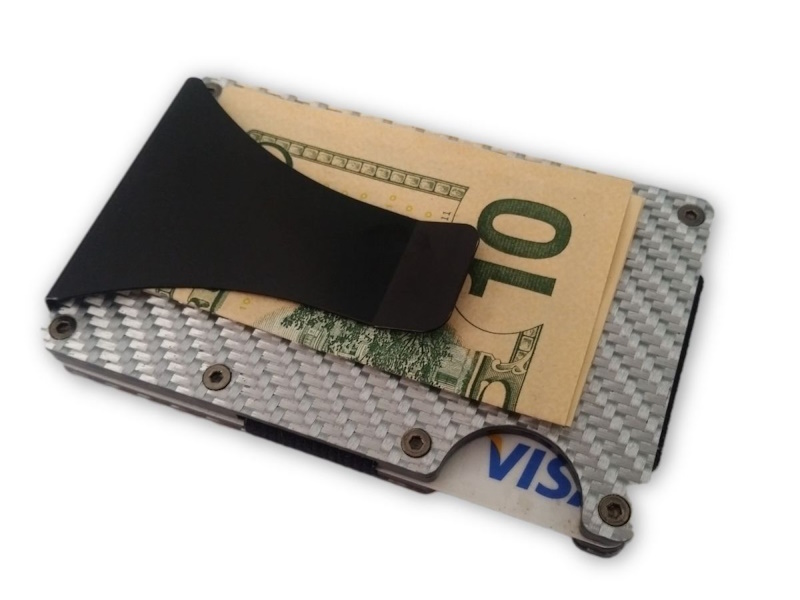
Minimal carry works especially well with rigid carbon builds
A simple carbon wallet setup for travel
One thing I love about carbon wallets is that they push you toward a clean system. Here is a setup that stays slim and sane:
- 2 payment cards (one primary, one backup)
- 1 ID you actually need
- Optional: 1 transit card
- A few bills folded once (if the wallet supports it)
Carbon rewards discipline. Keep the stack tight, and the wallet stays flat and comfortable. Overstuff it, and you lose the point.
Final thought: carbon is not fashion - it is performance
I like leather. I like metal. I even like a well-made fabric wallet. But when someone asks me why carbon wallets exist, my answer is simple: carbon is the rare material that lets a wallet be rigid, slim, and light at the same time, while staying stable through heat, sweat, and daily abuse.
If you are the kind of person who appreciates strong materials and smart engineering, a carbon wallet is not a trend. It is a logical upgrade. And once you get used to that crisp, flat, always-the-same shape in your pocket, it is hard to go back.